
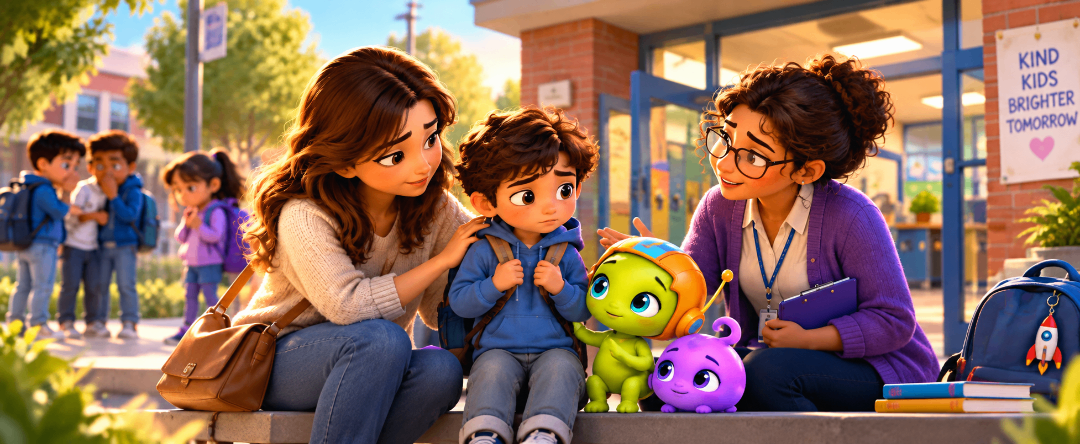
Is Your Child Coming Home Different Lately?
If you're worried about your child being bullied at school, trust that instinct. Children rarely announce it. They grow quiet, skip lunch, or suddenly dread the morning bus. Many believe adults will overreact, or that telling will only make things worse. That silence is exactly why parents need to notice the small changes first. Knowing what to do when your child is being bullied at school starts with paying attention, then responding calmly, quickly, and with a clear plan.
7 Warning Signs Your Child Is Being Bullied
Look for patterns, not one bad day. Bullying rarely looks the same in every child, but these are the most common signs your child is being bullied:
Unexplained bruises, torn clothes, or missing belongings such as lunch money, books, or jackets
Frequent stomachaches or headaches, especially on school mornings
Reluctance to go to school, or pleading to skip the bus or certain classes
Changes in appetite or sleep, including nightmares
Falling grades or a sudden loss of interest in favorite activities
Fewer friends, sudden withdrawal, or avoiding social events
Anger, tearfulness, or anxiety after using phones, games, or social media
One sign alone may mean nothing. Several together deserve a gentle conversation.
How to Talk to Your Child About Bullying?
Choose a relaxed moment, like a walk, a drive, or bedtime. Children open up more easily when they are not face to face. Start with open questions such as, "Who do you sit with at lunch?" or "Is anyone being unkind to you lately?" Listen without interrupting, and resist the urge to fix everything immediately. Then say, "This isn't your fault, and I'm really glad you told me." Avoid blaming, asking what they did to provoke it, or advising them to just toughen up. Many kids stay silent because they fear making things worse, so your reaction in this first conversation shapes whether they trust you with the next one.
Step-by-Step: What to Do When Your Child Is Being Bullied at School
Stay calm and thank your child for trusting you. Your composure tells them the problem is manageable.
Document everything: dates, names, locations, what happened, and any screenshots or messages. Clear records make your report far harder to dismiss.
Ask how they'd like to be supported, so they feel involved instead of powerless.
Contact the school in writing and request a meeting with the teacher and counselor.
Practice simple responses at home: walking away, speaking firmly, staying near friends, and telling a trusted adult right away.
Follow up every week until the bullying stops. One email is rarely enough.
Watch their emotional health, and consider a school counselor or therapist if distress lingers.
Do not confront the other child or their parents yourself. It usually escalates the situation and can put your child at greater risk.
How to Report Bullying at School the Right Way
Start with the classroom teacher, then move to the school counselor or principal. Email a summary of your records so there is a paper trail, and ask what action the school will take and when you will hear back. Most schools have a written anti-bullying policy, so request a copy and ask which procedure applies. If nothing changes, escalate to the district office. StopBullying.gov explains how to report bullying at school and what rights families have. For cases involving discrimination based on race, disability, or sex, you can also contact the U.S. Department of Education's Office for Civil Rights. Stay firm but respectful; schools respond best to parents who are organized and collaborative.
Why Prevention Matters: How Schools Can Stop Bullying Before It Starts
Responding matters, but learning how to stop bullying at school ultimately comes down to prevention. Schools that wait for incidents are always a step behind. A strong bullying prevention program for elementary schools builds empathy, communication, and bystander skills early, before harmful habits form. Yozgoo is a research-backed, game-based program for grades 2 to 6, developed with Clemson University. On the Yozgoo platform, students practice handling physical, verbal, exclusion, and cyberbullying situations through play, so they know what to do before it happens to them or a classmate. Ask your principal or counselor to explore Yozgoo, and share this article with your school.